Out of School (OST) Community Collaborations for Collective Impact and Positive Youth Development
In recent years, the importance of the out-of-school time programming for children and youth has grown in response to the needs of working families.
Search Tip: Search with " " to find exact matches.
In recent years, the importance of the out-of-school time programming for children and youth has grown in response to the needs of working families.
Join us to hear from a panel of partner organizations that are working with Rebuild to realize the program’s impact.
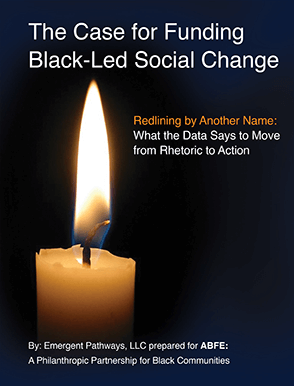
ABFE: A Philanthropic Partnership for Black Communities (ABFE), recently conducted a study to learn how leaders of Black-led social change organizations in the United States and U.S. Territories describe their interactions with institutional philanthropy.
In Deciding Together: Shifting Power and Resources Through Participatory Grantmaking, we look at why and how funders are engaging in participatory grantmaking and shifting decision-making power to the very communities impacted by funding decisions. Through examples and insights from a diverse range of participatory grantmakers, we explore the benefits, challenges, and models of participatory grantmaking.
An increasing number of foundations are embracing racial equity/equity as a core value, and it is influencing how they see themselves and operate. However, evaluation has for the most part remained untouched. Knowing how race/racism has influenced both, philanthropy and evaluation, deepens our understanding of how philanthropic evaluation practice may unintentionally reinforce racism. Equitable evaluation shifts the current evaluation paradigm to one that centers equity/racial equity, so that it is more aligned with the values and intentions of current day philanthropic endeavors.
For a decade, Knight Foundation has been intentional about identifying high quality, diversely-owned asset managers when investing its endowment. In response to frequent questions from a variety of stakeholders into the performance of the charitable sector regarding this issue — the questions arising from the general lack of data — Knight Foundation asked Global Economics Group to assess the representation of diverse asset managers among foundations.
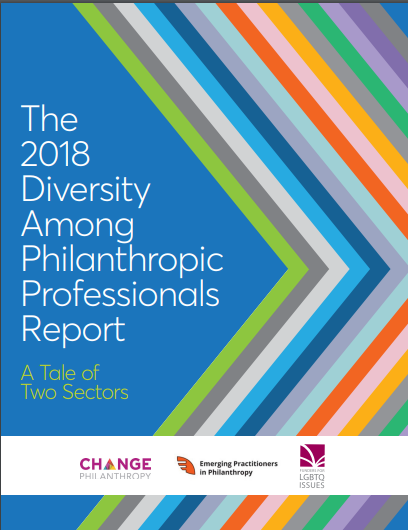
In 2018, Funders for LGBTQ Issues set out to survey the board and staff of foundations in order to identify how many LGBTQ people worked in philanthropy. In the process, the organization realized that it had an opportunity to not only ask about sexual orientation and gender identity but also to inquire about a range of personal identifiers. With the inaugural Diversity Among Philanthropic Professionals (DAPP) Survey, Funders for LGBTQ Issues asked participants to identify their role within their foundation, their age, gender identity, sexual orientation, race and ethnicity, and disability status. This report lays out the results of the DAPP survey in aggregate form.
Through a series of interviews, roundtables, and a short survey, Philanthropy Network and Urbane Development gathered input from key stakeholders in the Philadelphia region who are involved (or want to be involved) in impact investing in order to better understand their priorities, needs, and challenges and to identify key opportunities to facilitate further impact investments in the region.
Due to the COVID-19 pandemic, the transition to remote work has presented numerous challenges for nonprofits and foundations alike. With most grantees working off-site, foundations need to consider the most effective and cost-efficient way to get funds to them beyond mailing checks. This resource includes the results of a Philanthropy Network benchmarking survey of e-payment practices in relation to grantmaking and two discussion threads found on PEAK Grantmaking's Open Forum.