Self-Dealing: A Concise Guide For Foundation Board and Staff
An overview on the self-dealing law, including definitions, common problem areas, exceptions, penalties, and resources.

Search Tip: Search with " " to find exact matches.
An overview on the self-dealing law, including definitions, common problem areas, exceptions, penalties, and resources.

Echoing Green and Bridgespan teamed up to research the depth of racial inequities in philanthropic funding.
In 2018, Funders for LGBTQ Issues set out to survey the board and staff of foundations in order to identify how many LGBTQ people worked in philanthropy. In the process, the organization realized that it had an opportunity to not only ask about sexual orientation and gender identity but also to inquire about a range of personal identifiers. With the inaugural Diversity Among Philanthropic Professionals (DAPP) Survey, Funders for LGBTQ Issues asked participants to identify their role within their foundation, their age, gender identity, sexual orientation, race and ethnicity, and disability status. This report lays out the results of the DAPP survey in aggregate form.
Results of an online experiment suggest that underrepresentation of people of color in the realm of investing is not only a pipeline problem, and that funds led by people of color might paradoxically face the most barriers to advancement after they have established themselves as strong performers.

For a decade, Knight Foundation has been intentional about identifying high quality, diversely-owned asset managers when investing its endowment. In response to frequent questions from a variety of stakeholders into the performance of the charitable sector regarding this issue — the questions arising from the general lack of data — Knight Foundation asked Global Economics Group to assess the representation of diverse asset managers among foundations.
This guide is designed to help local place-based funders invest quickly in leaders and organizations who are poised to address the threat of political violence around the United States election in 2020.

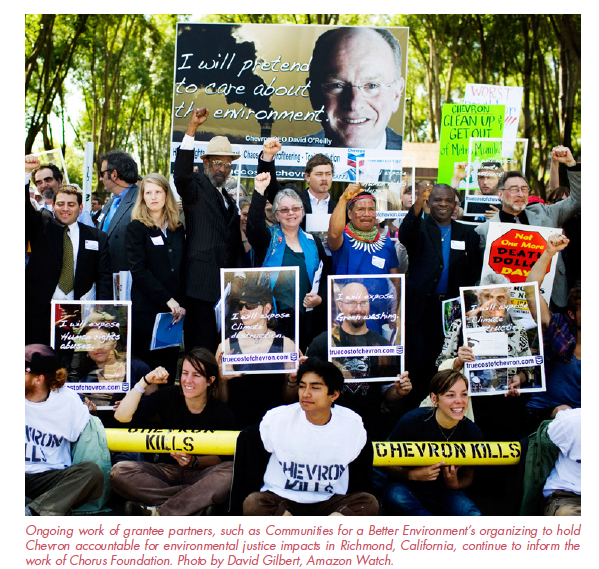
In this case study of the Chorus Foundation, Farhad Ebrahimi shares how exploring relationships between economic, political and cultural power has been a game changer for their climate philanthropy.
This toolkit presents easy-to-use resources to help nonprofits and funders take action to advance talent justice. The tools can be used by both nonprofits and funders to increase their investments in talent justice at all stages of the nonprofit career lifecycle.
Guide your philanthropy clients through the complexities of their work in diversity, equity and inclusion (DEI) with our DEI Toolkit for Consultants to Grantmakers.
[2021] As part of Philanthropy Network's Strategic Transformation Initative, Frontline Solutions conducted a literature review of organizations that support philanthropic entities and initiatives, as well as the strategies they have begun to employ in the current social and political environment.