Site Search
Search Tip: Search with " " to find exact matches.
Chester County Community Foundation “Food for Thought” Board Trustee Edition Goes Digital This September
Formerly held in person and known as the Board Trustee Institute, this new virtual series will explore a variety of topics geared towards helping nonprofits grow and thrive during these troubling times.
The Secret Weapon for Achieving Your Foundation’s Goals
Philanthropy’s Imperative: How to Discuss White Supremacy with Staff, Boards, and Nonprofit Partners
Impact of COVID-19 on the Cultural Sector: Data from the Cultural Alliance
Equity-centered Evaluation Design: How Funders Can Assess Progress in Partnership with Nonprofits and Community
Mission-Aligned Investing: A model for maximizing philanthropic impact and equity
As part of Philanthropy Network's Mission-Aligned Investing Cohort, philanthropic leaders are learning together how to align their assets with their mission and invest in the community using a racial equity lens.
The Crisis of White Supremacy in America: What’s Philanthropy’s Role?
Regional Roundtable: Community Violence - LGBTQIA+
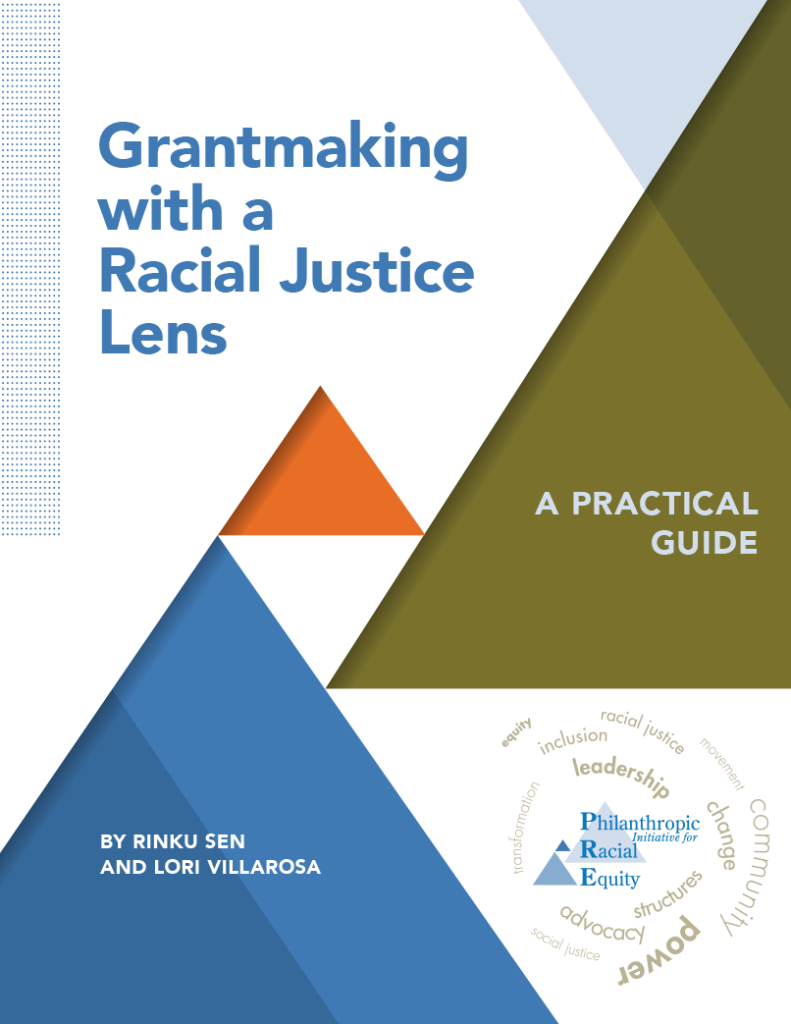
Grantmaking with a Racial Justice Lens: A Practice Guide
Grantmaking with a Racial Justice Lens: A Practical Guide centers the perspectives of racial justice activists first, and then of funders working on change in their institutions, to identify best practices for driving philanthropy beyond racial equity toward racial justice.
What’s Race Got to Do With It? Equity and Philanthropic Evaluation Practice
An increasing number of foundations are embracing racial equity/equity as a core value, and it is influencing how they see themselves and operate. However, evaluation has for the most part remained untouched. Knowing how race/racism has influenced both, philanthropy and evaluation, deepens our understanding of how philanthropic evaluation practice may unintentionally reinforce racism. Equitable evaluation shifts the current evaluation paradigm to one that centers equity/racial equity, so that it is more aligned with the values and intentions of current day philanthropic endeavors.
Diversity of Asset Managers in Philanthropy
For a decade, Knight Foundation has been intentional about identifying high quality, diversely-owned asset managers when investing its endowment. In response to frequent questions from a variety of stakeholders into the performance of the charitable sector regarding this issue — the questions arising from the general lack of data — Knight Foundation asked Global Economics Group to assess the representation of diverse asset managers among foundations.
Supporting Immigrants and Refugees during COVID-19
Donor Collaboration: How NPT Philanthropists are Working Together to Increase Impact
2021 SPARX Conference
32nd Annual Members' Meeting: Envisioning a Trust-Based Future for Philanthropy
Join us online on the afternoon of June 18th for our 32nd Annual Members' Meeting, where we'll feature national and local speakers who are leading in the trust-based philanthropy movement.
Special Funder Briefing: City of Philadelphia FY 2022 Budget
Join city representatives for a funder briefing and discussion about plans and priorities for the City of Philadelphia's FY2022 Budget.
COVID-19 Funder Briefing #19
COVID-19 funder briefings are open to all funders in the Greater Philadelphia region.
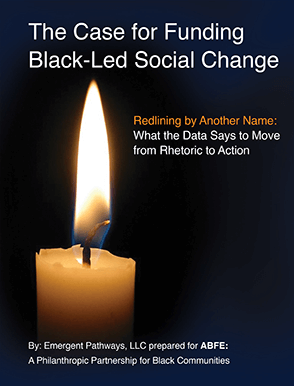
The Case for Funding Black-Led Social Change: Redlining by Another Name: What the Data Says to Move from Rhetoric to Action
ABFE: A Philanthropic Partnership for Black Communities (ABFE), recently conducted a study to learn how leaders of Black-led social change organizations in the United States and U.S. Territories describe their interactions with institutional philanthropy.
The Case for Funding Black-Led Social Change: Case Statement
The Case for Funding Black-Led Social Change intends to spark new energy to vitalize and strengthen the infrastructure for Black-led organizations. The 18-page document was issued by the Black Social Change Funders Network (BSCFN), an initiative forged by the leadership of ABFE: A Philanthropic Partnership for Black Communities and the Hill-Snowdon Foundation.