Pensions & Investments: It's racial bias, not merely an issue of access
Published:
08/2019
New research shows that Black fund managers must overcome racial bias to win institutional money and are judged more harshly as top performers.

Search Tip: Search with " " to find exact matches.
New research shows that Black fund managers must overcome racial bias to win institutional money and are judged more harshly as top performers.
A new report from JOHN S. AND JAMES L. KNIGHT FOUNDATION showcases how Philadelphia and four other cities have reimagined their public spaces as part of a national initiative called Reimagining the Civic Commons.
ABFE: A Philanthropic Partnership for Black Communities (ABFE), recently conducted a study to learn how leaders of Black-led social change organizations in the United States and U.S. Territories describe their interactions with institutional philanthropy.

For a decade, Knight Foundation has been intentional about identifying high quality, diversely-owned asset managers when investing its endowment. In response to frequent questions from a variety of stakeholders into the performance of the charitable sector regarding this issue — the questions arising from the general lack of data — Knight Foundation asked Global Economics Group to assess the representation of diverse asset managers among foundations.
This report by the Funders’ Network for Smart Growth and Livable Communities examines the potential of anchor institutions hold to create lasting and sustainable change—and illustrates how funders are working with anchor institutions to create healthier, more equitable, and economically vibrant places to live and work.
An increasing number of foundations are embracing racial equity/equity as a core value, and it is influencing how they see themselves and operate. However, evaluation has for the most part remained untouched. Knowing how race/racism has influenced both, philanthropy and evaluation, deepens our understanding of how philanthropic evaluation practice may unintentionally reinforce racism. Equitable evaluation shifts the current evaluation paradigm to one that centers equity/racial equity, so that it is more aligned with the values and intentions of current day philanthropic endeavors.
In 2020, ProFellow, the leading online resource for information on professional and academic fellowships,partnered with IREX to produce the 2020 Fellowship Industry Report.
In Deciding Together: Shifting Power and Resources Through Participatory Grantmaking, we look at why and how funders are engaging in participatory grantmaking and shifting decision-making power to the very communities impacted by funding decisions. Through examples and insights from a diverse range of participatory grantmakers, we explore the benefits, challenges, and models of participatory grantmaking.

Echoing Green and Bridgespan teamed up to research the depth of racial inequities in philanthropic funding.

This new comprehensive research primer from Aspen Institute EPIC draws on extensive review of the research literature, engagement with more than 100 experts, and analysis of federal survey data.
Due to the COVID-19 pandemic, the transition to remote work has presented numerous challenges for nonprofits and foundations alike. With most grantees working off-site, foundations need to consider the most effective and cost-efficient way to get funds to them beyond mailing checks. This resource includes the results of a Philanthropy Network benchmarking survey of e-payment practices in relation to grantmaking and two discussion threads found on PEAK Grantmaking's Open Forum.
Women Give 2019 is the first study to explore the intersection of race, giving and gender. The report finds that generosity is a value shared by all communities, and that women across race and ethnicity are leading through philanthropy. As communities of color grow in wealth and influence, the study demonstrates the unique perspectives women of color bring to philanthropy and underscores the importance of understanding and engaging donors from diverse backgrounds.
Grantmaking with a Racial Justice Lens: A Practical Guide centers the perspectives of racial justice activists first, and then of funders working on change in their institutions, to identify best practices for driving philanthropy beyond racial equity toward racial justice.
While cross-sector collaborations in support of local education reform show promise, they also often face challenges. This series of case studies found that that collaborations required "a credible and compelling rationale" as well as committed local advocates.
The report is an in-depth baseline needs assessment of women in Montgomery County, PA and explores eight major areas affecting the lives of women: employment and earnings; work and family; poverty and opportunity; health and well-being; reproductive rights and infant health; violence and safety; political participation; and women veterans.
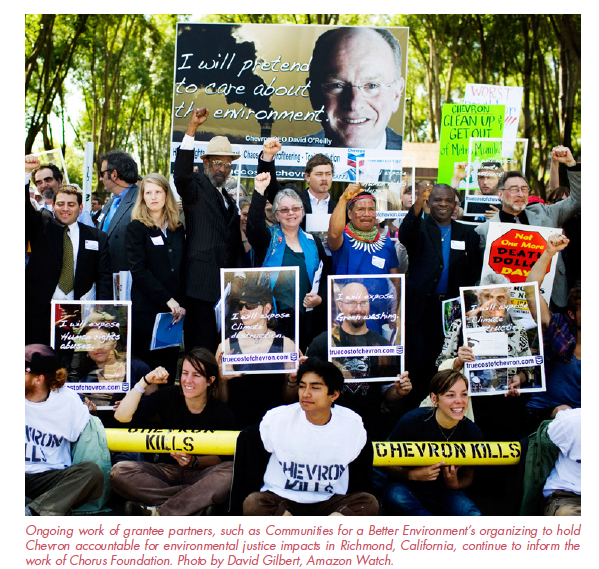
In this case study of the Chorus Foundation, Farhad Ebrahimi shares how exploring relationships between economic, political and cultural power has been a game changer for their climate philanthropy.
An overview on the self-dealing law, including definitions, common problem areas, exceptions, penalties, and resources.
The Case for Funding Black-Led Social Change intends to spark new energy to vitalize and strengthen the infrastructure for Black-led organizations. The 18-page document was issued by the Black Social Change Funders Network (BSCFN), an initiative forged by the leadership of ABFE: A Philanthropic Partnership for Black Communities and the Hill-Snowdon Foundation.