Placed-Based Impact Investing: Three Briefs for Practitioners
Seeking ways to maximize the social and economic returns of their place-based impact investments, foundations, CDFIs, private investors, and others are turning to collaboration.
Search Tip: Search with " " to find exact matches.
Seeking ways to maximize the social and economic returns of their place-based impact investments, foundations, CDFIs, private investors, and others are turning to collaboration.
Due to the COVID-19 pandemic, the transition to remote work has presented numerous challenges for nonprofits and foundations alike. With most grantees working off-site, foundations need to consider the most effective and cost-efficient way to get funds to them beyond mailing checks. This resource includes the results of a Philanthropy Network benchmarking survey of e-payment practices in relation to grantmaking and two discussion threads found on PEAK Grantmaking's Open Forum.
In Deciding Together: Shifting Power and Resources Through Participatory Grantmaking, we look at why and how funders are engaging in participatory grantmaking and shifting decision-making power to the very communities impacted by funding decisions. Through examples and insights from a diverse range of participatory grantmakers, we explore the benefits, challenges, and models of participatory grantmaking.
The Case for Funding Black-Led Social Change intends to spark new energy to vitalize and strengthen the infrastructure for Black-led organizations. The 18-page document was issued by the Black Social Change Funders Network (BSCFN), an initiative forged by the leadership of ABFE: A Philanthropic Partnership for Black Communities and the Hill-Snowdon Foundation.
ABFE: A Philanthropic Partnership for Black Communities (ABFE), recently conducted a study to learn how leaders of Black-led social change organizations in the United States and U.S. Territories describe their interactions with institutional philanthropy.
For a decade, Knight Foundation has been intentional about identifying high quality, diversely-owned asset managers when investing its endowment. In response to frequent questions from a variety of stakeholders into the performance of the charitable sector regarding this issue — the questions arising from the general lack of data — Knight Foundation asked Global Economics Group to assess the representation of diverse asset managers among foundations.
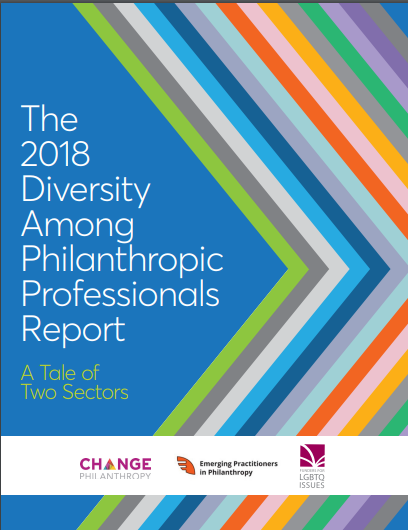
In 2018, Funders for LGBTQ Issues set out to survey the board and staff of foundations in order to identify how many LGBTQ people worked in philanthropy. In the process, the organization realized that it had an opportunity to not only ask about sexual orientation and gender identity but also to inquire about a range of personal identifiers. With the inaugural Diversity Among Philanthropic Professionals (DAPP) Survey, Funders for LGBTQ Issues asked participants to identify their role within their foundation, their age, gender identity, sexual orientation, race and ethnicity, and disability status. This report lays out the results of the DAPP survey in aggregate form.
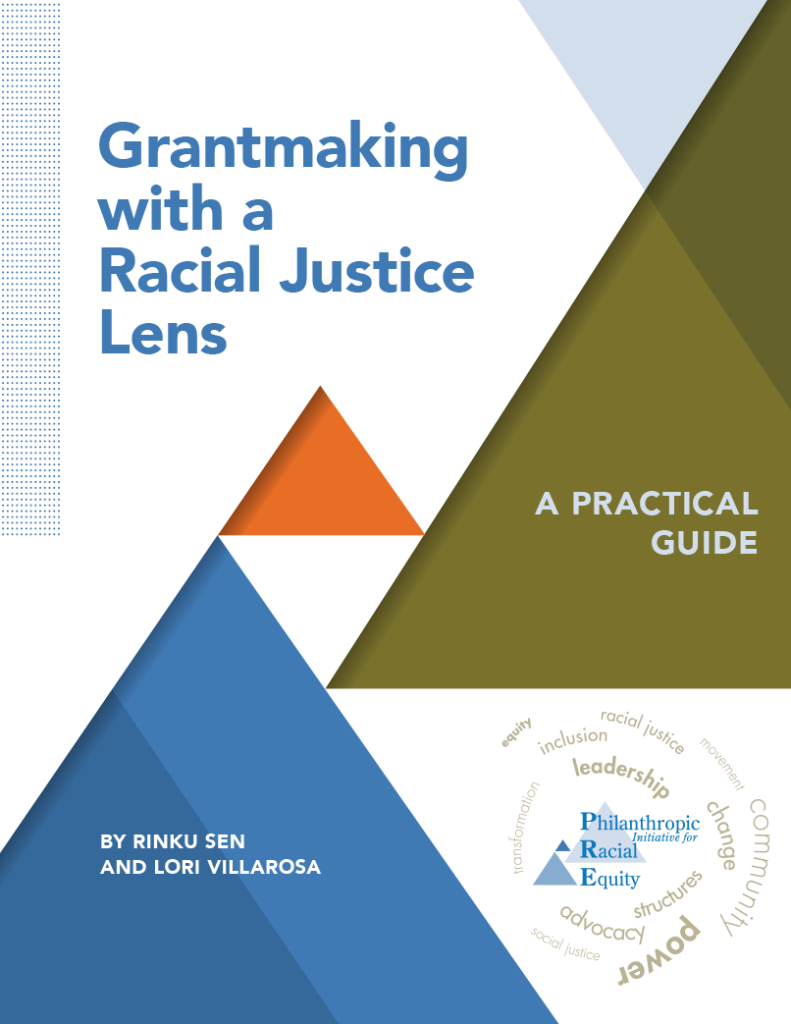
Grantmaking with a Racial Justice Lens: A Practical Guide centers the perspectives of racial justice activists first, and then of funders working on change in their institutions, to identify best practices for driving philanthropy beyond racial equity toward racial justice.
An increasing number of foundations are embracing racial equity/equity as a core value, and it is influencing how they see themselves and operate. However, evaluation has for the most part remained untouched. Knowing how race/racism has influenced both, philanthropy and evaluation, deepens our understanding of how philanthropic evaluation practice may unintentionally reinforce racism. Equitable evaluation shifts the current evaluation paradigm to one that centers equity/racial equity, so that it is more aligned with the values and intentions of current day philanthropic endeavors.
Philanthropy Network Greater Philadelphia’s Out of School Time Funders and Small Funders Roundtable are excited to invite you to a discussion on the importance and impact of data in our work as change agents.
Proactive communication with your grantees is essential during times of disaster. The Nelson Foundation has kindly agreed to share some of their COVID-19 grantee email communications with Philanthropy Network membership.

Philanthropy Network Greater Philadelphia’s Chester County Funders Group invites you to join us for a continuing discussion on Diversity, Equity, & Inclusion, Practical Applications, and Tales from the Field.
Philanthropy Network's Mission-Aligned Investing Working Group is pleased to bring Ty Thiele, Founder of Andorra.
Please join us for the next meeting of Philanthropy Network’s Delaware County Funders Group where attendees will hear about new county initiatives and have the opportunity to share updates and key happenings in their own work.
Philanthropy Network Greater Philadelphia's Chester County Funders Group is convening to discuss 2020 Census.
Join your small funder colleagues for a conversational session on Wednesday, December 11, 2019 (3pm-5pm) to reconnect with colleagues, share updates on your work (including changes that you’ve undertaken since our last meeting and/or that are on deck for 2020), share lessons learned, and ask questions of each other.
Join us online on the afternoon of June 18th for our 32nd Annual Members' Meeting, where we'll feature national and local speakers who are leading in the trust-based philanthropy movement.
Members of Philanthropy Network are cordially invited to attend the next episode of “Chat with an Expert,” an initiative of Walls Torres Group. In partnership with Philanthropy Network’s Equity in Philanthropy Cohort programming, this episode is now being made available to the full membership.
This webinar with Candid will provide information on their eReporting program, the why and how to share grants data, improvements to the e-reporting template and more.