Site Search
Search Tip: Search with " " to find exact matches.
Equity-centered Evaluation Design: How Funders Can Assess Progress in Partnership with Nonprofits and Community
Deepening our Experience in Lower North Philadelphia - A Guided Tour of Communities in and around Philadelphia’s 22nd Police District
Diversity of Asset Managers in Philanthropy
The Case for Funding Black-Led Social Change: Redlining by Another Name: What the Data Says to Move from Rhetoric to Action
Community-led Philanthropy during Crisis: How Giving Circles of Color Can Transform Traditional Philanthropy
Mission-Aligned Investing Meeting: How to work with your investment advisor
Grantmaking with a Racial Justice Lens: A Practice Guide
Grantmaking with a Racial Justice Lens: A Practical Guide centers the perspectives of racial justice activists first, and then of funders working on change in their institutions, to identify best practices for driving philanthropy beyond racial equity toward racial justice.
Placed-Based Impact Investing: Three Briefs for Practitioners
Seeking ways to maximize the social and economic returns of their place-based impact investments, foundations, CDFIs, private investors, and others are turning to collaboration.
Grants Management Professional Competency Model
Deciding Together: Shifting Power and Resources Through Participatory Grantmaking
In Deciding Together: Shifting Power and Resources Through Participatory Grantmaking, we look at why and how funders are engaging in participatory grantmaking and shifting decision-making power to the very communities impacted by funding decisions. Through examples and insights from a diverse range of participatory grantmakers, we explore the benefits, challenges, and models of participatory grantmaking.
The Case for Funding Black-Led Social Change: Case Statement
Essentials for Effective Philanthropy - Overview: Greater Philadelphia Grantmaking Landscape
Giving Circle Spotlight: Q&A with the Asian Mosaic Fund
What’s Race Got to Do With It? Equity and Philanthropic Evaluation Practice
An increasing number of foundations are embracing racial equity/equity as a core value, and it is influencing how they see themselves and operate. However, evaluation has for the most part remained untouched. Knowing how race/racism has influenced both, philanthropy and evaluation, deepens our understanding of how philanthropic evaluation practice may unintentionally reinforce racism. Equitable evaluation shifts the current evaluation paradigm to one that centers equity/racial equity, so that it is more aligned with the values and intentions of current day philanthropic endeavors.
Regional COVID-19 Response Dashboard: Findings and Lessons Learned
The Crisis of White Supremacy in America: What’s Philanthropy’s Role?
The Secret Weapon for Achieving Your Foundation’s Goals
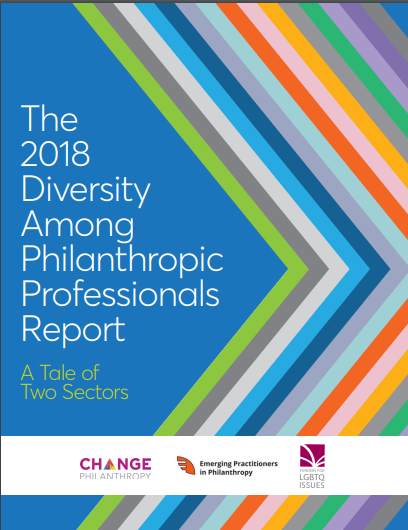
2018 Diversity Among Philanthropic Professionals Report
In 2018, Funders for LGBTQ Issues set out to survey the board and staff of foundations in order to identify how many LGBTQ people worked in philanthropy. In the process, the organization realized that it had an opportunity to not only ask about sexual orientation and gender identity but also to inquire about a range of personal identifiers. With the inaugural Diversity Among Philanthropic Professionals (DAPP) Survey, Funders for LGBTQ Issues asked participants to identify their role within their foundation, their age, gender identity, sexual orientation, race and ethnicity, and disability status. This report lays out the results of the DAPP survey in aggregate form.